

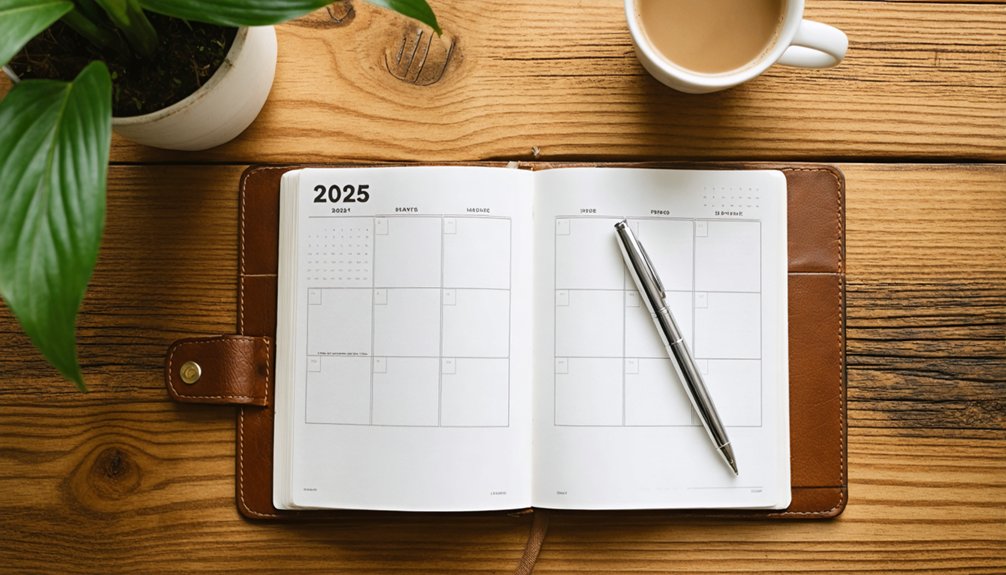

Setting Realistic Learning Goals for 2025
To create a successful learning plan for 2025, individuals must define specific, achievable objectives and assess their current schedule and commitment level. This involves choosing learning resources that fit their style, breaking down large goals into smaller tasks, and establishing a realistic timeline for achieving success.
Developing a system to track progress and overcome obstacles is also crucial. By doing so, individuals can make steady progress towards their goals, leading to a more fulfilling learning experience with lasting results.
For instance, if someone wants to learn a new language, they should start by setting a specific goal, such as passing a language proficiency test. Then, they can break down this goal into smaller tasks, like dedicating 30 minutes each day to language study and using a language learning app like Duolingo.
Establishing a routine and tracking progress can help individuals stay motivated and focused on their goals. By being realistic and intentional with their learning plan, individuals can achieve their goals and enjoy a sense of accomplishment.
“The key to success is not setting a goal, but creating a system that helps you achieve it.”
A well-structured plan can help individuals overcome common obstacles, such as procrastination and lack of motivation. By identifying potential roadblocks and developing strategies to overcome them, individuals can stay on track and achieve their goals.
Ultimately, setting realistic learning goals for 2025 requires careful planning, commitment, and a willingness to adapt to challenges. By following these steps, individuals can set themselves up for success and enjoy a fulfilling learning experience.
Highlights
Setting Realistic Learning Goals for 2025
To achieve success in learning, it’s essential to establish clear objectives. Start by identifying what you want to learn and why. Be specific and define your goals in a way that aligns with your interests and skill gaps. This will help you stay motivated and focused throughout the process.
Assessing Your Schedule and Commitments
Take an honest look at your current schedule and commitments. Determine how much time you have available for learning and prioritize your activities accordingly. Make adjustments as needed to ensure you have enough time to dedicate to your goals.
Choosing the Right Learning Resources
Select learning resources that fit your individual learning style. This could include online courses, workshops, or educational apps. Using resources that cater to your needs will increase your motivation and engagement, making it more likely that you’ll stick to your goals.
Breaking Down Big Goals into Manageable Chunks
Divide large goals into smaller, manageable tasks. Create a timeline with realistic deadlines and track your progress regularly. This will help you stay focused and accountable throughout the learning process.
Maintaining a Positive Mindset
Develop a positive mindset and prepare for potential obstacles. Create contingency plans and practice self-compassion to overcome setbacks. Remember that setbacks are a natural part of the learning process, and having a plan in place will help you stay on track.
Identify Your Learning Objectives
Setting Clear Learning Objectives: A Key to Effective Learning
Clear learning objectives are specific, well-defined, and achievable goals that individuals set for their learning process. These objectives align with personal interests and identified skill gaps, allowing learners to focus their efforts, prioritize their time, and measure progress.
To identify clear learning objectives, it’s crucial to reflect on strengths, weaknesses, and interests. Assessing current knowledge and skills helps pinpoint areas that need improvement. By setting realistic and achievable goals, individuals can create a fulfilling and successful learning experience.
A clear learning objective should be concise, yet meaningful. It should provide a roadmap for the learning process, helping individuals stay on track and motivated. For instance, instead of setting a vague goal like “I want to learn a new language,” a clear learning objective would be “I want to learn conversational Spanish by dedicating 30 minutes each day to language practice.”
By establishing clear learning objectives, individuals can take ownership of their learning process, making it more effective and enjoyable.
As Benjamin Franklin once said, “An investment in knowledge pays the best interest.” Investing time and effort into setting clear learning objectives can yield significant returns, leading to personal and professional growth.
Assess Your Current Schedule and Commitment
Evaluating Your Schedule: A Key to Achieving Learning Goals
To set realistic learning goals, you need to take a closer look at your current schedule and commitments. Start by analyzing how many hours a week you can dedicate to learning, considering your existing obligations, such as work, family, and social responsibilities. Proper time management is vital to ensure your learning goals are achievable and sustainable.
To make time for learning, prioritize your commitments and identify which activities can be adjusted or sacrificed. This may mean cutting back on non-essential tasks or waking up earlier each day. By evaluating your schedule, you can set realistic expectations and avoid overcommitting yourself.
Why Prioritization Matters
Prioritizing your commitments is crucial, as it allows you to focus on the most important goals and allocate your time and resources accordingly. When you prioritize your goals, you can create a schedule that supports your learning objectives, helping you stay on track and achieve success.
In essence, a thorough evaluation of your schedule and commitment lays the groundwork for successful learning. By understanding your limitations and prioritizing your goals, you can create a learning plan that is both achievable and sustainable.
Quote: “The key is not to prioritize what’s on your schedule, but to schedule your priorities.” – Stephen Covey
Choose Learning Resources That Fit Your Style
Learning on Your Terms
Understanding your schedule and commitments is just the beginning. The next step is to choose learning resources that fit your individual style. Learning effectively requires resources that cater to different needs and preferences. You can opt for online courses that offer flexibility and accessibility.
If you prefer hands-on experience, interactive workshops are a great way to engage with instructors and peers. Other options include textbooks, podcasts, and educational apps.
When selecting resources, consider factors such as your learning pace, visual or auditory preferences, and level of interactivity. This thoughtful approach ensures a productive and enjoyable learning experience. By choosing resources that align with your learning style, you’ll stay motivated and engaged.
For instance, if you’re a visual learner, you may prefer video tutorials or infographics. On the other hand, if you’re an auditory learner, podcasts or audiobooks might be more effective.
By acknowledging your strengths and weaknesses, you can create a personalized learning plan that works for you.
“A learning experience that is tailored to an individual’s needs and preferences is more likely to result in long-term success.”
Break Down Big Goals Into Manageable Chunks
Breaking down ambitious learning goals into smaller, manageable chunks is a crucial step towards achieving success. When learners tackle a large goal all at once, it can be overwhelming.
By focusing on one task at a time, learners can create a sense of accomplishment and momentum as each smaller goal is achieved. Dividing a large goal into smaller milestones helps learners develop a clear roadmap for success, identify potential obstacles, and develop contingency plans.
Achieving each milestone builds confidence and motivation, ultimately driving progress towards the larger goal. This approach allows learners to maintain a sense of control and make steady progress towards their objectives.
Alternatively, this text can be presented in a more detailed and structured manner, as shown below:
Breaking Down Big Goals
Setting ambitious learning goals can be motivating, but tackling them all at once can be counterproductive. To achieve success, it’s essential to break down big goals into smaller, manageable chunks.
Creating a Roadmap for Success
By dividing a large goal into smaller milestones, learners can develop a clear roadmap for success. This approach helps identify potential obstacles and develop contingency plans.
Focusing on one task at a time allows learners to create a sense of accomplishment and momentum as each smaller goal is achieved.
Building Confidence and Motivation
Achieving each milestone builds confidence and motivation, ultimately driving progress towards the larger goal. This approach allows learners to maintain a sense of control and make steady progress towards their objectives.
Create a Timeline for Achieving Your Goals
Creating a timeline helps learners organize their time and resources effectively, ensuring they stay on track to achieve their goals. With a well-structured timeline, learners can visualize the bigger picture, understand how tasks relate to each other, and make informed decisions about their learning process.
Setting realistic deadlines for each goal creates a sense of accountability and focus, allowing learners to prioritize tasks and allocate sufficient time for each activity. As needed, adjustments can be made to ensure steady progress and celebrate milestones along the way. By turning goals into a concrete plan of action, learners can stay motivated and driven to succeed.
Breaking down big goals into manageable chunks is crucial for creating a timeline that accurately reflects the learning process. A timeline allows learners to allocate time for each task, make adjustments, and stay focused on their objectives.
Establish a System for Tracking Progress
Tracking Progress: A Key to Achieving Goals
Learners need a systematic approach to monitoring their progress to ensure steady advancement toward their objectives. This involves identifying relevant metrics, such as course completion rates, quiz scores, or project evaluations, to assess performance and adjust strategies. Utilizing tracking tools like learning management systems, mobile apps, or spreadsheet templates can facilitate this process.
Regular review of progress data enables learners to acknowledge successes, address areas for improvement, and maintain motivation. A well-structured tracking system helps learners stay focused, adapt to challenges, and make consistent progress toward their goals. This, in turn, fosters a sense of accomplishment and belonging within their learning community.
Why Tracking Progress Matters
By monitoring progress, learners can make data-driven decisions, celebrate milestones, and identify areas requiring attention. This approach helps learners develop a growth mindset, recognizing that progress is a continuous process. A tracking system also provides a sense of accountability, encouraging learners to stay committed to their goals.
Implementing a Tracking System
To establish an effective tracking system, learners should:
- Identify relevant progress metrics
- Choose a suitable tracking tool
- Set realistic goals and milestones
- Regularly review progress data
- Adjust strategies as needed
By following these steps, learners can create a personalized tracking system that supports their unique goals and learning style. This approach enables learners to take ownership of their progress, stay motivated, and achieve their objectives.
“The key to success is to focus our conscious mind on things we desire not on things we fear.” – Brian Tracy
In the context of tracking progress, this quote emphasizes the importance of maintaining a positive and focused mindset. By concentrating on desired outcomes and monitoring progress, learners can overcome obstacles and achieve their goals.
Make a Plan for Overcoming Obstacles and Setbacks
Developing a plan to overcome obstacles and setbacks is crucial for achieving success in the learning process. Obstacle identification and setback strategies are essential components of this plan. By recognizing potential obstacles, learners can prepare contingency plans, reducing the likelihood of being derailed from their goals.
When faced with setbacks, strategies such as reassessing goals, seeking support, and practicing self-compassion can help learners regain momentum and motivation. Incorporating these strategies into a learning plan enables individuals to develop resilience and perseverance, essential qualities for achieving success.
A well-prepared learner can overcome obstacles and setbacks, stay on track, and reach their goals, ultimately fostering a sense of belonging and accomplishment within their learning community. By adopting a proactive approach, learners can turn challenges into opportunities for growth and development.
As the old adage goes, “Fall seven times, stand up eight.” With the right mindset and strategies, learners can overcome any obstacle and achieve their goals.
Conclusion
Setting Realistic Learning Goals for 2025
Creating a solid foundation for learning success in 2025 requires a structured approach. Start by defining clear objectives, evaluating your schedule, and selecting suitable resources. Break down large goals into manageable chunks and establish a realistic timeline to maintain focus and momentum. Regularly tracking progress and having a plan to overcome obstacles will ensure steady progress towards achieving learning objectives.
To achieve success, it’s essential to prioritize your goals and focus on making steady progress. A well-structured plan helps maintain motivation and momentum, even when faced with challenges. By doing so, individuals can turn their learning aspirations into tangible accomplishments.
Breaking Down Big Goals into Manageable Chunks
Divide large goals into smaller, manageable tasks to avoid feeling overwhelmed. This approach helps maintain focus and ensures steady progress towards achieving learning objectives. For example, if your goal is to learn a new language, break it down into smaller tasks such as dedicating 30 minutes each day to language practice or enrolling in a language course.
Establishing a Realistic Timeline
Create a timeline that outlines specific milestones and deadlines. This approach helps maintain focus and ensures steady progress towards achieving learning objectives. Be realistic when setting deadlines, and make sure to leave room for flexibility in case unexpected obstacles arise.
Tracking Progress and Overcoming Obstacles
Regularly tracking progress is crucial to achieving learning objectives. Use a journal, spreadsheet, or mobile app to monitor progress and identify areas that require improvement. Having a plan to overcome obstacles will also ensure steady progress towards achieving learning objectives. Identify potential obstacles and develop strategies to overcome them, such as seeking guidance from a mentor or joining a study group.