


2025 Education Trends to Watch
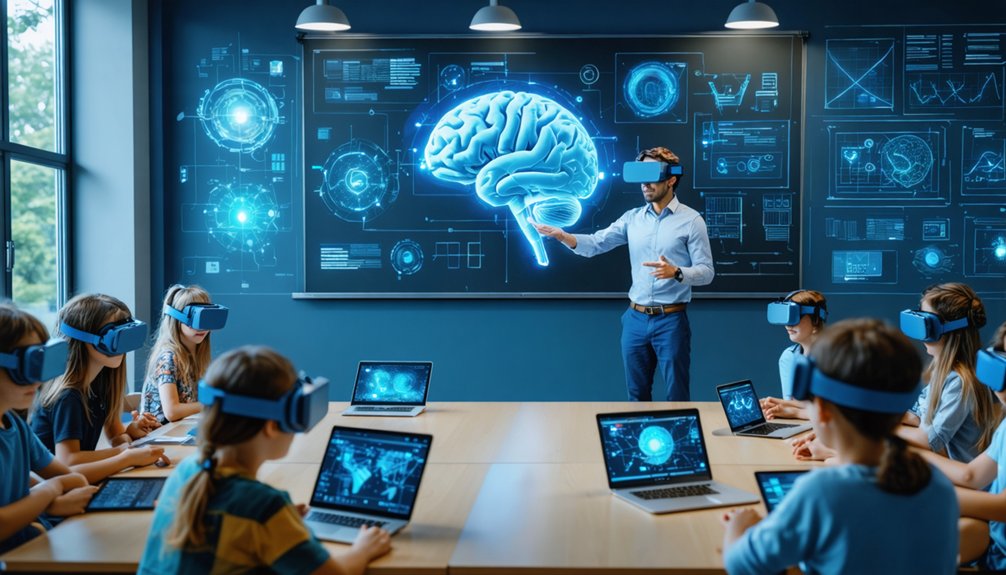
The education landscape is undergoing significant changes in 2025, driven by emerging trends that are set to transform the way students learn and educators teach. One key development is the growing use of immersive learning technologies, such as virtual and augmented reality, which are boosting student engagement and participation.
Artificial intelligence is also playing a crucial role in creating personalized learning paths tailored to individual students’ needs and abilities. This approach is helping to shift the focus away from traditional grading systems and towards competency-based progression, where students progress through levels based on their demonstration of specific skills and knowledge.
Another important trend is the increasing emphasis on social-emotional learning, which aims to equip students with the skills and competencies needed to succeed in an ever-changing world. This includes skills such as self-awareness, self-regulation, and empathy, which are essential for building strong relationships and achieving academic success.
Finally, microlearning is revolutionizing the way educators approach professional development, providing them with bite-sized chunks of learning that can be easily integrated into their busy schedules. By staying on top of these trends and understanding their implications, educators, policymakers, and students can navigate the changing education landscape with confidence.
As education expert, Andreas Schleicher, notes, “The future of education is not about what we teach, but about how we teach, and how we create learning environments that are engaging, inclusive, and effective.” By embracing these trends and working together, we can build a brighter future for all students.
Highlights
2025 Education Trends
Immersive learning with Virtual Reality (VR) and Augmented Reality (AR) is on track to expand by 2025, making complex concepts more accessible to students.
Artificial Intelligence (AI) drives personalized learning, emphasizing competency-based progression. This approach prioritizes student-centered learning, where demonstrating skills takes precedence over traditional grading.
There’s a growing emphasis on social-emotional learning and well-being. These aspects are recognized as crucial to students’ academic success and overall development.
Microlearning platforms offer educators flexible, self-paced training opportunities. This helps them develop new skills and stay updated on changing educational standards.
Data-driven decision-making and automated assessments can improve educational outcomes. However, these methods require careful evaluation to ensure fairness and transparency.
Why these trends matter
By prioritizing immersive learning, AI-driven education, and social-emotional well-being, educators can create more inclusive and supportive learning environments. As a result, students are more likely to succeed academically and develop essential life skills.
Microlearning platforms address educators’ need for continuous professional development. With the rise of data-driven decision-making, schools can refine their teaching methods and improve student outcomes.
As technology continues to evolve, it’s crucial for educators to stay informed about these trends and adapt their teaching strategies accordingly.
A closer look at AI-driven education
Personalized learning powered by AI focuses on individual students’ strengths, weaknesses, and learning styles. This approach can be particularly beneficial for students who struggle with traditional teaching methods.
AI-driven education also enables educators to create customized learning plans tailored to each student’s needs. This can lead to more effective skill development and better academic outcomes.
The significance of social-emotional learning
Social-emotional learning is critical to students’ academic success and personal growth. By incorporating social-emotional learning into their curricula, educators can help students develop essential life skills, such as self-awareness, empathy, and self-regulation.
What’s next for education
The future of education is likely to be shaped by technological advancements, changing societal needs, and evolving teaching methods. By embracing these trends and staying adaptable, educators can create more effective, student-centered learning environments.
Expert Insights
“The effective integration of technology in education is not about using technology for its own sake, but about using it to improve student learning and enhance teaching.”
Immersive Learning Experiences Through Virtual and Augmented Reality
Immersive Learning Experiences on the Rise
Educational institutions are turning to immersive technologies like virtual reality (VR) and augmented reality (AR) to create interactive learning experiences. These technologies allow students to practice and apply theoretical knowledge in a controlled environment, improving retention and understanding of complex concepts.
Virtual simulations recreate real-world environments, providing a safe space for students to experiment and learn. For instance, medical students can practice surgeries in a virtual environment, reducing the risk of errors and improving their skills.
Augmented reality, on the other hand, overlays digital information onto the physical world, offering a more detailed and situated learning experience. This can be particularly useful in fields like architecture, where students can visualize and interact with 3D models of buildings.
By incorporating immersive technologies, educational institutions can foster a sense of community among students and promote deeper learning. This trend is expected to continue growing in 2025, as more institutions recognize the benefits of immersive learning experiences.
As Nadine Strossen, a law professor and former ACLU president, notes, “Interactive technology can make complex concepts more accessible and engaging, especially for students who may struggle with traditional teaching methods.”
The use of immersive technologies in education is not just about innovation; it’s about creating a more effective learning environment. By providing students with hands-on experience and interactive tools, educational institutions can help them develop the skills they need to succeed in their chosen careers.
Personalized Learning Paths With Artificial Intelligence
Personalized Learning Paths Revolutionize Education
Educational institutions are increasingly using artificial intelligence (AI) to create customized learning paths tailored to each student’s unique needs. By employing adaptive algorithms, these systems assess individual strengths, weaknesses, and learning style preferences, providing personalized instruction that fosters academic success.
AI-driven platforms analyze student data, identifying areas where learners require additional support or enhancement, enabling educators to deliver targeted interventions and scaffolding techniques.
Through AI-facilitated personalized learning paths, students receive individualized feedback, encouraging active learning, promoting self-assessment, and developing agency over their educational experience. This integration of human teaching and AI-driven support enables learners to reach their full potential, cultivating an inclusive and supportive educational environment.
By providing students with the right tools and resources, educators can help them overcome challenges and achieve their goals.
As Michael Horn, co-founder of the Clayton Christensen Institute, notes, “Personalized learning is not just about technology; it’s about understanding the needs of each student and providing them with the right instruction and support to help them succeed.”
Competency-Based Progression Replaces Traditional Grading
Rethinking Grading Systems: A Shift towards Competency-Based Progression
The education landscape is undergoing a significant transformation, with competency-based progression emerging as a more effective alternative to traditional grading systems. This approach emphasizes students’ demonstration of specific skills and knowledge, rather than accumulating credits or grades. By using performance metrics to measure student progress, educators can provide a clear understanding of strengths and weaknesses.
In this system, expertise levels are defined, allowing students to work at their own pace and accelerate or decelerate as needed. This flexibility enables students to take ownership of their learning, fostering a sense of agency and motivation. By focusing on expertise over grades, educators can create a more inclusive and supportive learning environment, where students feel valued and equipped to succeed.
This shift towards competency-based progression is not just about changing the way students are assessed; it’s about creating a more student-centered approach to learning. By emphasizing expertise over grades, educators can help students develop a growth mindset and a love of learning that will serve them well throughout their lives.
As the education landscape continues to evolve, it’s clear that competency-based progression is an approach that’s here to stay.
Increased Focus on Social-Emotional Learning and Well-being
Prioritizing Student Well-being in Education
The education sector is undergoing a significant shift, with a growing emphasis on students’ social-emotional learning and well-being. This change in focus acknowledges the intrinsic link between students’ emotional and social development and their academic success. By integrating mindfulness practices and social-emotional learning into the curriculum, educators can help students cultivate essential life skills, including emotional intelligence, self-awareness, and self-regulation.
These skills enable students to navigate complex social situations effectively, foster stronger relationships, and achieve greater academic success. Consequently, schools are working to create safe and supportive environments that promote a sense of belonging, empathy, and understanding among students, teachers, and the broader community.
By prioritizing social-emotional learning and well-being, educators can empower students to thrive in all aspects of life. As Rachel Sutton, a renowned educator, notes, “When we prioritize student well-being, we’re not just improving academic outcomes – we’re shaping the next generation of compassionate leaders and global citizens.”
By adopting this holistic approach to education, schools can help students develop into confident, capable, and well-rounded individuals equipped to succeed in an ever-changing world.
Now schools incorporate mindfulness exercises and social-emotional learning activities into daily lesson plans. Such activities may include role-playing, group discussions, and reflection exercises.
Educators also strive to create a positive school culture by promoting inclusivity, respect, and empathy. The goal is to ensure that every student feels valued, supported, and encouraged to reach their full potential.
Rise of Microlearning in Professional Development for Educators
Microlearning on the Rise in Professional Development for Educators
Research has consistently shown that ongoing professional development is crucial for educators to improve their instructional skills and stay current with the latest teaching methodologies. In response to this need, microlearning platforms have become a significant trend in professional development for educators. These platforms offer bite-sized, self-paced learning opportunities that accommodate the busy schedules of educators.
By utilizing microlearning, educators can participate in targeted skill-building exercises, collaborate with peers, and access a vast repository of educational resources. This approach is expected to increase educator engagement and motivation, leading to improved teacher retention and student outcomes.
As the educational landscape continues to evolve, microlearning is poised to transform the way educators learn and grow. A key benefit of microlearning is its flexibility. Educators can engage with microlearning platforms at their own pace, whenever and wherever is most convenient for them.
This flexibility is particularly important for educators who often have demanding schedules with limited time for professional development. By providing educators with the opportunity to learn in short, focused intervals, microlearning platforms can help them stay up-to-date with the latest teaching methodologies and technologies.
The rise of microlearning in professional development is also driven by the need for educators to stay current with changing educational standards and technologies. With microlearning, educators can quickly and easily access the information and resources they need to stay ahead of the curve.
This approach is particularly important in today’s fast-paced educational environment, where new technologies and methodologies are constantly emerging. As one educator noted, “Microlearning has been a game-changer for me. It’s allowed me to learn new skills and stay current with the latest teaching methodologies, all on my own schedule.
I feel more confident and prepared in the classroom, and I know that my students are benefiting from my newfound knowledge and skills.” Overall, the rise of microlearning in professional development is a significant trend that is poised to transform the way educators learn and grow.
Data-Driven Decision Making With Learning Analytics
Harnessing the Power of Data in Education
Technology has transformed the educational landscape, generating vast amounts of data that can inform instruction and improve student outcomes. However, it’s only recently that educators have begun to tap into this wealth of information. By analyzing learning analytics, educators can identify areas where students struggle and develop targeted interventions to boost academic achievement.
This data-driven approach allows for a more precise evaluation of program effectiveness, revealing knowledge gaps and opportunities to refine curriculum design. Educators can make informed decisions that foster student success, promote a sense of belonging, and create a more inclusive learning environment.
Predictive analytics plays a key role in this process, enabling educators to anticipate and address potential challenges before they become major issues. By leveraging data insights, educators can tailor instruction to meet the unique needs of each student, leading to improved academic outcomes and increased student satisfaction.
As the education sector continues to evolve, the effective use of data will become increasingly important. By embracing data-driven decision making, educators can create a more personalized and effective learning experience that prepares students for success in the years to come.
“Data is not just a tool for evaluation; it’s a catalyst for transformation. By harnessing its power, we can unlock new opportunities for growth, innovation, and student success.”
Navigating Challenges and Benefits of Automated Assessments
Automated Assessments in Education: Balancing Benefits and Challenges
The increasing reliance on data-driven decision making in education has created a need for more efficient and effective assessment methods. One potential solution is automated assessments, which offer several benefits, including faster and more accurate grading, as well as personalized feedback for students. However, concerns about fairness and bias in automated systems have sparked debate.
Ensuring Fairness and Transparency
To mitigate these risks, educators must carefully evaluate the design and implementation of automated assessments. This includes ensuring that assessments are transparent, reliable, and free from bias. When implemented thoughtfully, automated assessments can improve student learning outcomes and reduce instructor workload.
A key consideration in the development of automated assessments is the potential for bias in the data used to train the assessment algorithms. If the data is biased, the assessments may produce unfair or discriminatory results. To address this challenge, educators must carefully select and evaluate the data used to train the assessment algorithms.
The Benefits of Automated Assessments
Automated assessments offer several benefits, including increased efficiency and accuracy in grading. They also provide personalized feedback to students, which can help to improve student learning outcomes.
Additionally, automated assessments can reduce instructor workload, allowing educators to focus on other important tasks.
Best Practices for Implementing Automated Assessments
To ensure the effective implementation of automated assessments, educators should follow several best practices. These include carefully evaluating the design and implementation of the assessments, ensuring that they are transparent and free from bias, and providing students with clear instructions and support.
The Future of Automated Assessments
As the use of automated assessments continues to grow, it is essential that educators prioritize fairness and transparency in the assessment process. By doing so, they can ensure that automated assessments are used to improve student learning outcomes, rather than exacerbate existing inequalities.
With careful planning and implementation, automated assessments can play a valuable role in enhancing the education system.
Conclusion
The 2025 education trends are all about creating a more effective and engaging learning environment. Schools are shifting towards immersive learning experiences that draw students into the subject matter. This approach, combined with personalized learning paths, allows students to learn at their own pace. The focus is on mastering specific skills rather than just completing a certain number of hours in class.
The incorporation of social-emotional learning will play a significant role in shaping the educational landscape. By acknowledging the importance of emotional intelligence, educators can help students develop essential life skills. Furthermore, microlearning opportunities will enable teachers to upgrade their skills and stay updated on the latest teaching methods.
Data analysis will become a crucial aspect of decision-making in schools. By leveraging data, educators can identify areas where students need extra support and tailor their teaching strategies accordingly. Automated assessments will bring about significant changes in the way student progress is evaluated. While these assessments offer several benefits, such as increased efficiency, they also present challenges that need to be addressed.
To keep pace with these emerging trends, educators and institutions must be willing to adapt and innovate. By doing so, they can create a more supportive and inclusive learning environment that prepares students for success in a rapidly changing world. Embracing these changes will be key to unlocking the full potential of the next generation of learners.
“Investing in education is not just about preparing students for the future; it is about empowering them to create the future they want.”